

Notes from the front row
For old time’s sake, I’m holding on to the Chanel lanyard.

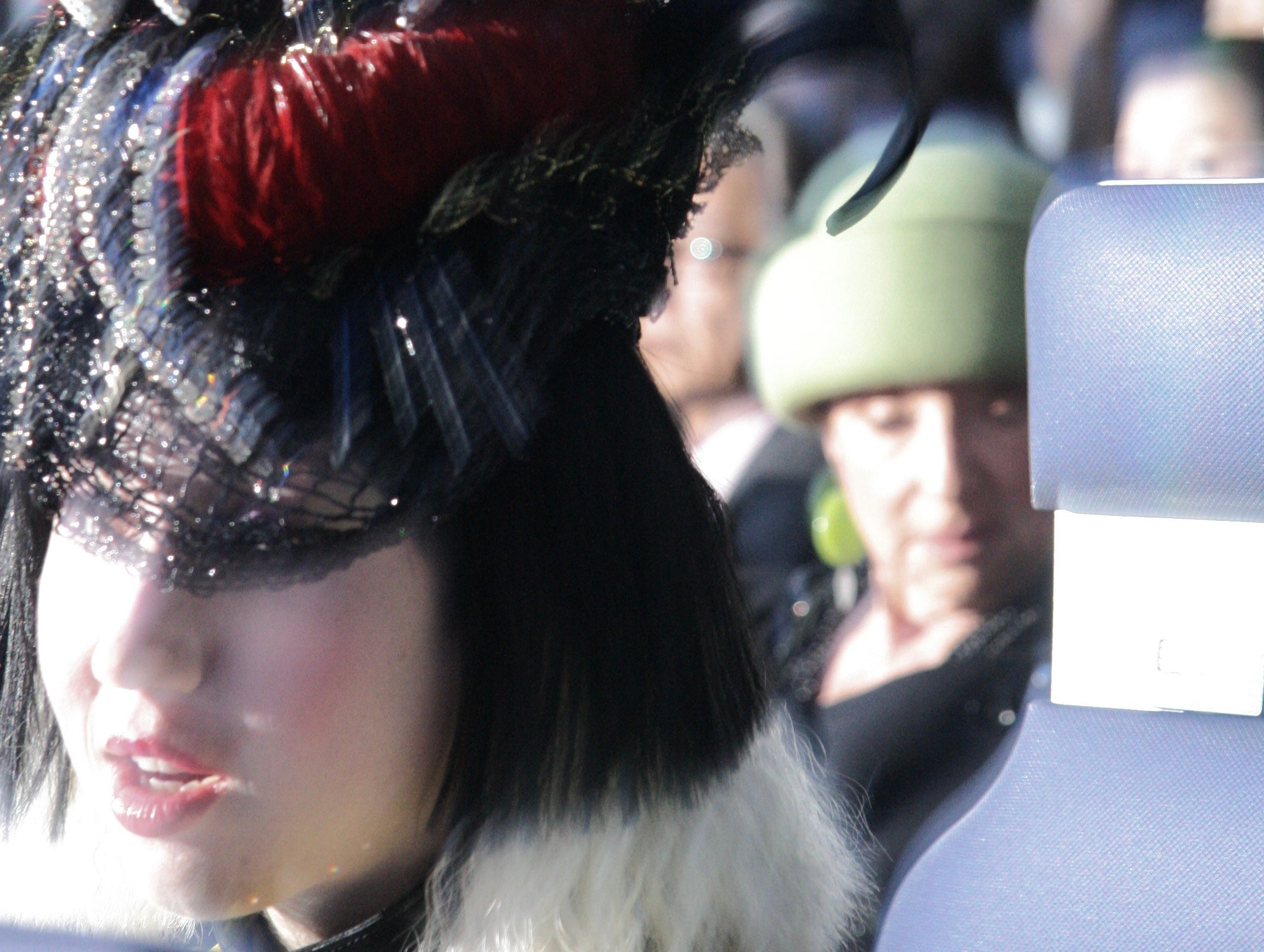
Chanel, Tokyo, March 2012, my pic.
I finally saw The Devil Wears Prada 2 … forgive my belated attention to this matter … I come not to offer a review but instead some scattered, semi-connected thoughts about the follow-up to the much-loved 2006 film about the terrifying fashion magazine editor Miranda Priestly (played by Meryl Streep, inspired by editor Anna Wintour and Vogue).
For a few years in the first decade of the century I worked at a luxe magazine with some fashion content (the now-defunct 😢 “The Sydney Magazine”, released monthly with The Sydney Morning Herald and styled graphically as the(sydney)magazine).
It’s not a stretch to say I was fashion-magazine adjacent. I have some sense of how magazines and fashion magazines work. I feel equipped to offer some reflection on TDWP2.
Like, once, in a time long ago, I was even flown business class to Tokyo for a couture show, a Chanel show no less. I still have the lanyard.
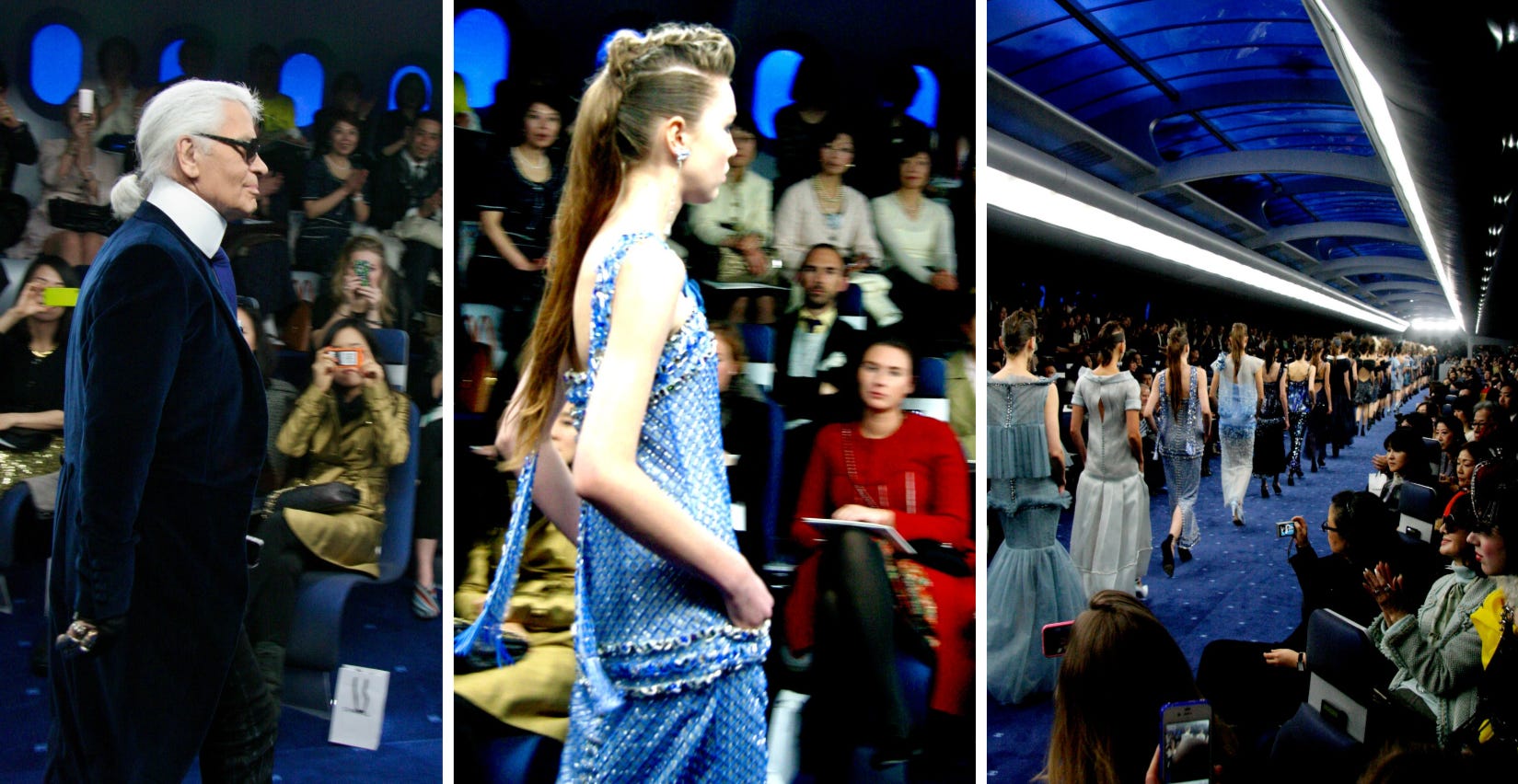
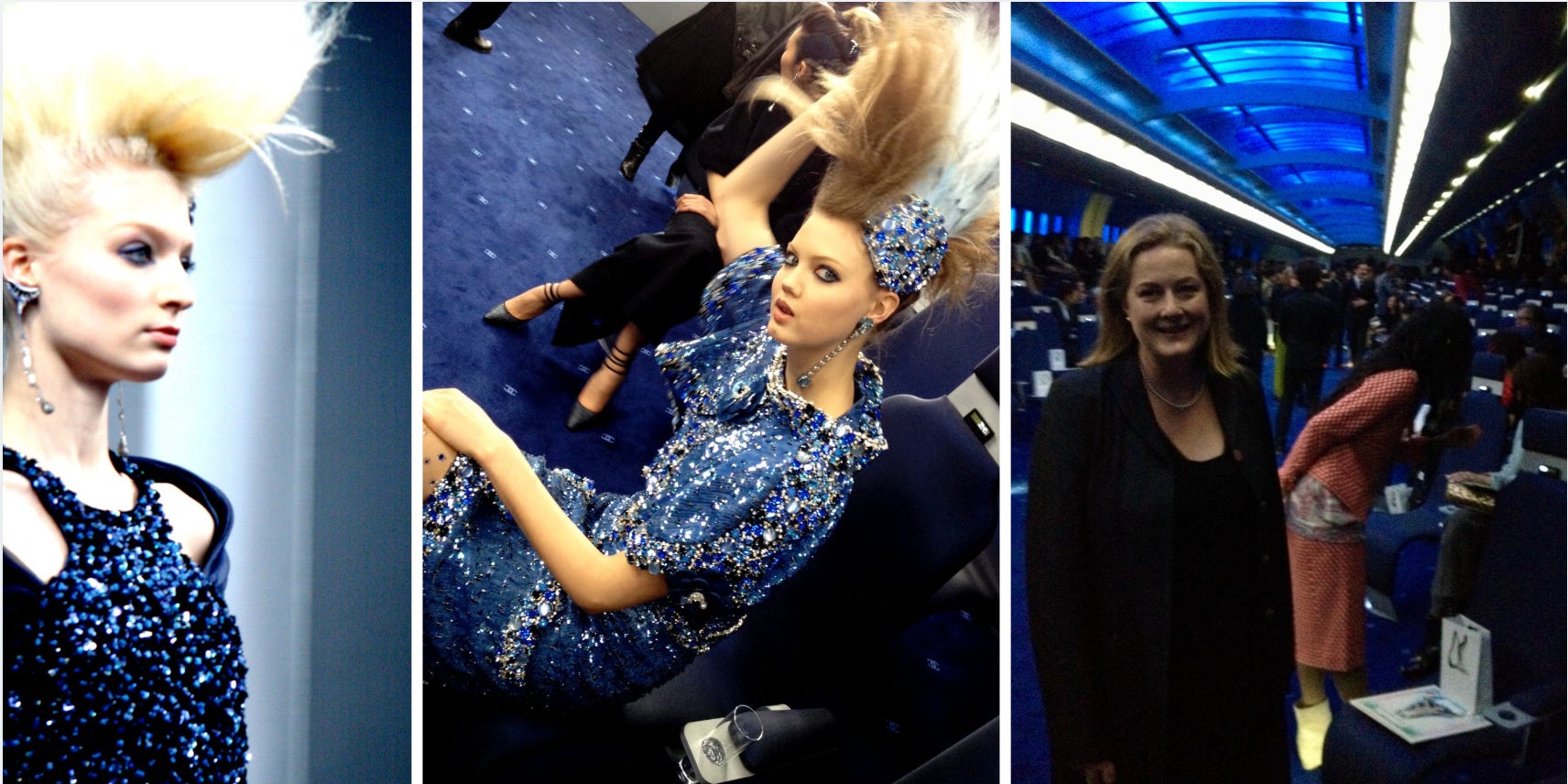
Chanel, Tokyo, March 2012, my pics, bar that of me bottom right, who took it, who knows?
Karl Lagerfeld (Sarah Jessica Parker on his arm) passed me by, like inches away, not once but twice! First, at an Aoyama exhibition of Lagerfeld’s photographs for his The Little Black Jacket, a book he photographed (styled/edited by French fashion editor and former model, Carine Roitfeld who, in some circles, is not insignificant … 2.8 million followers on Instagram). Second, the following day, at the Chanel 2012 Spring/Summer runway show (my understanding is that to call it a fashion parade would immediately signal my lack of sophistication) in a space in the Shinjuku Gyoen National Garden styled as the interior of an “Air Chanel” plane.
True, I was no style icon in a front-row seat, no time, no money, no body, no fashion closet to raid as Anne Hathaway’s TDWP character Andy does; I think I dug some old things out of the back of my wardrobe to pack, dark/black, sufficient. Besides, what I looked like didn’t matter, no one was looking at me.
Fringe-dweller that I was, my internal monologue through the show was censorious, sacrilegious: I thought the whole thing was, well, a bit silly, emperor’s new clothes and all that. But I didn’t say so in the article I wrote for the(sydney)magazine. Of course I didn’t. Chanel was my host.*
Look, I guess the dresses were decent. Some had nice sequins. Maybe the sequins had been stitched on by the hands of a hundred virgins. Maybe Mr Lagerfeld himself had signed off on every individual sequin. And the colours, all the blues, my favourite – apparently 150 shades of blue – were very fine. But the tornado hair? Really? Why? The stick-insect models? Seriously, still, why? The gushing and carry-on and cultiness? Spare me. I kept wishing there was a call button above my seat so I could get a drink. I kept thinking about the Akasaka sushi bar to which I planned to escape afterwards.
At a press conference, the next day I think, in a ballroom at Tokyo’s Park Hyatt Hotel, I ventured a couple of questions to Mr Lagerfeld. A bit provincial, I know, but how, I asked him, did the library of his mind see Australia/Australian imagery.
His reply: “I would love to go to Australia but I need a professional reason to go to Australia. I’m not a tourist, I’m not a holiday person. I don’t believe in, I go to beach and lay in the sun and wait for inspiration; you get dumb and brown, that’s all you get.”
Right, dumb and brown.
Oh, The Devil Wears Prada 2? Oh yes, that’s what I was writing about …
So, to buy into this sequel requires a greater suspension of disbelief than I can manage: we’re meant to believe that Andrea “Andy” Sachs (Anne Hathaway), who began as an assistant at Runway magazine in the 2006 film, has, by the sequel, become an award-winning investigative reporter for a serious news publication but returns to Runway, seemingly with few qualms, as its features editor. Barely minutes in movie time after accepting a journalism award for the serious publication with a fiery speech – “journalism still fucking matters!” she cries in a sort of man-the-barriers Les-Mis way – she is back at Runway dipping into the fashion closet and editing/writing features about designer labels’ new looks and skincare.
I tried to take that leap with the film but tripped and fell.
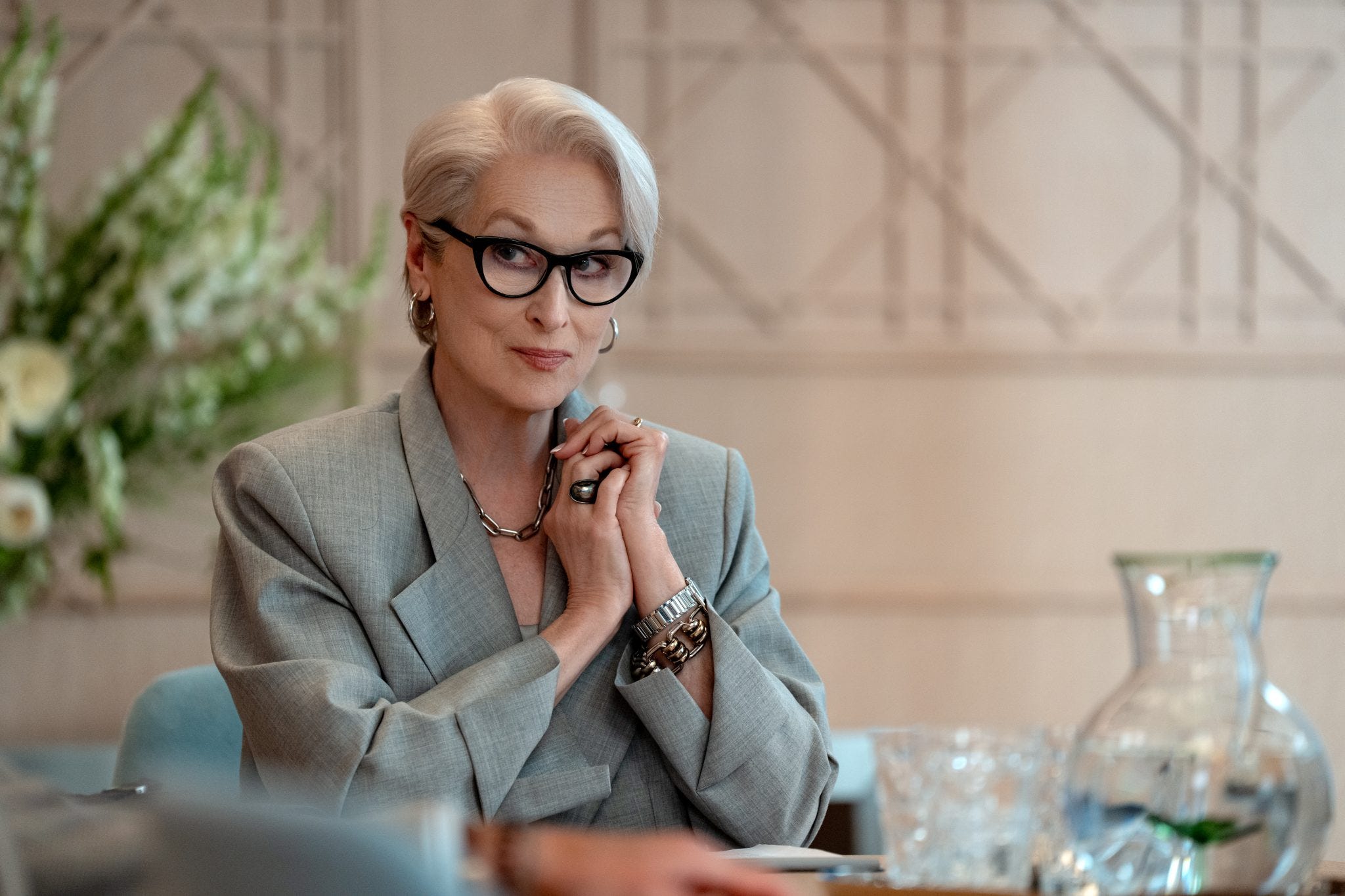
Meryl Streep as Miranda Priestley in The Devil Wears Prada 2 (The Walt Disney Company).
My disbelief tripped me up again when Andy “interviews” Dior executive Emily (played by Emily Blunt) as she whisks her around Dior’s new New York flagship store on a tour. Andy seems to be carrying a little notebook; at one point, she even appears to scratch a couple of notes down. Me when I have to walk and talk to subjects at the same time? I’m a slapstick comedy routine, a panicky juggler of notebook, pen, tape recorder. If there’s a real features writer alive who can walk, interview, concentrate, take even half-legible notes, not use a tape recorder, yet, back at their desk still write something decent and accurate, I’ll buy them a drink.
Oh, and then there’s that small matter of her old toxic boss, Miranda Priestly.
Over decades, I have had the misfortune of working for several unpleasant, undermining female editors. They are a very special breed unto themselves. You don’t go back to them. Not ever. You would rather stick pins in your eyes than ever, ever go back and work for them again.
Journalists who have moved between magazines and newspapers, as I have, those who love the alchemy of words and images, as well as people who once could not imagine life without being in monthly possession of a number of hefty glossy titles (Vanity Fair, Vogue, Esquire, Monocle, GQ, American Gourmet, Vogue Entertaining, a design title or two etc), might find TDWP2 a requiem for magazines (also see “Mood” below).
Some might dismiss magazines as superficial relics but once, most, even Vogue, were home to outstanding narrative non-fiction writing, to brilliant columnists, and extraordinary ideas, art direction, photography, graphic design and illustration. That creativity formed the backbone, the luxury-product ads paid for it all. Thinking ruefully on this, I dug back to find something Tina Brown (former editor of Tatler, Vanity Fair, The New Yorker and Talk magazine) said in a 2025 interview with The Shift’s Sam Baker:
“I think of those Vanity Fair days as the dinosaur days. They were the great days of Condé Nast, and they were so much fun. It wasn’t just about the expense accounts, it was about the freedom and joy of only having to really think about the content, the hiring of the writers, how your cover was going to look, and what was going to be in the magazine. I spent my time finding talent, growing talent, splashing the work, and getting people excited about it. The offices that I had at Vanity Fair, The New Yorker, Tatler, and The Daily Beast were these humming thrives of fun, creative people who couldn’t wait to get to the office. It was a bloody Camelot!”
“When Magazines Ruled the World” was the headline on a CNN Business article last year timed to coincide with the 30th anniversary of the launch of the late John F. Kennedy Jr’s magazine, George. “The same magazines that could once make or break a designer or an author, announce a new star, or dictate what we’d all be wearing a few months later today have a fraction of that influence,” the article observed.
I think of all the magazine things I’ve loved over the years, oh look, so many, just a few:
The first feature writing I’m sure I ever saw, a sports column from Esquire, August 1984; a university lecturer shared it with my class. The writer, Pete Dexter, profiled the Canadian professional wrestler, Joseph Maurice Régis “Mad Dog” Vachon. Dexter described the wrestler: “He is fifty-four years old and the top of his head, which is as shiny and hairless as your liver, is freshly scarred in a way that resembles a crayon drawing of the sun”. I still have the print-out of the article the lecturer handed out in class, four decades ago, good grief. I’ve highlighted the words – “the top of his head, which is as shiny and hairless as your liver…”. The simile floors me.
Items of “furniture” (see “F” here) such as New York magazine’s “The Approval Matrix” and wild ideas such as Vanity Fair’s (satirical) “The Impossible Interview”, eg, Kim Jong-Un speaks with Anthony Bourdain (2012), Kanye West speaks with Pope Francis (2014). Plus, VF’s “celebrated interrogation”, the “Proust Questionnaire” (“What is the trait you most deplore in yourself?”, “What is your current state of mind?”, “Which historical figure do you most identify with?”).
The extraordinary pieces of writing – “Frank Sinatra Has a Cold” (Gay Talese, Esquire again, 1965); “The American Man, Age 10” (Susan Orlean, also Esquire, December 1992 – wonderful annotated take on the story here); the rolling and remarkable post 9-11 coverage including “Manifest Courage: The Story of Flight 93” (Bryan Burrough, Vanity Fair, December 2001).
But, oh well, too bad, it’s just about all over. In a world of digital media, smartphones, apps, AI, splintered attention, influencers, social media, a world where anyone can make content, the floods of advertising dollars that once permitted editors with brilliant minds like Tina Brown to pay properly for the best of words, photography, illustration and design, have, for the most part, dried up to a trickle. (Thank goodness for The New Yorker magazine which continues to thrive; it even got an Easter egg in TDWP2 – an iconic black and white New Yorker tote hangs in Andy’s apartment.)
In the film, Runway magazine is greatly diminished from its outing 20 years ago in part one – in its size, prestige and budget.
And, perhaps the most truthful, and raw, moment comes when Miranda Priestly is forced to turn right not left when she boards a plane for the Milan shows.
I felt like crying, but not for her, or for business-class travel – rare is the journalist who turns left not right these days, even on someone else’s dime – I felt like crying for the lost world that moment represented, a world that understood that good journalism and good writing were worth paying for.
I flinched, I did, when Emily looked Andy up and down and said: “You’ve changed, you have, you’re much more confident; kept those eyebrows though, didn’t you.” Oh eyebrows. How I’ve let mine go.
And, when Stanley Tucci’s character, Nigel, looked Andy up and down and observed – “well, look what TJ Maxx dragged in” – I felt my Anko T-shirt and leggings upon me.
Andy has nothing on me when it comes to going downhill.
Down a few cinema seats from where my friend and I sat, a bunch of teen girls settled in with giggles and enough junk food to stock a supermarket. Were they 13, 14, 15? Something like that.
In a grumpy-old-woman-sort-of-a-way I glanced at them every so often through the first few minutes of TDWP2 to gauge their noise levels; soon I was sneaking looks to check their reactions.
So much must have sailed over their heads. Nigel, on quiet luxury: “luxury that is so quiet that you need an ear trumpet”. Miranda Priestly looking at (a reproduction of) “The Last Supper”, talking about Leonardo Da Vinci and human fallibility ...
The kids were there for the labels, the fashion, the stars, the glitter, the popcorn.
How were they to know that the culture eating them has eaten my industry?
*When you read the declaration at the bottom of articles, frequently travel articles, with words to the effect of “X was the guest of Y”, do know that X cannot say what they really think about Y. No, I don’t feel good about my complicity, not good at all. In another time even longer ago I worked at The Independent in London. And it was. Freebies of any kind were forbidden. But that was an era when print media still was a viable business; publications could afford to send journalists all over the place to cover things independently. I’m not sure there’s a publication left that can afford to do that.
And look what I found in my files, the text of my 2012 article on Tokyo-Chanel …


Gather round my fire: a rare special Vamp offer!
A couple of years ago I asked you to tell me about yourself. This week I found myself re-reading your responses to my survey and it’s reminded me what remarkable humans gather round my fire.
You are artists, psychologists, nurses, lawyers, teachers, carers, farmers, former (and current) journalists, authors, gallery directors, environmental campaigners, doctors, researchers, scientists, television producers, ceramicists. You live in cities and regions, in seaside towns and country hamlets, and some of you beam in from abroad. You are caring for ageing parents, writing novels, rebuilding your lives after divorce, dealing with illness and grief, learning to swim, learning to paint, learning to breathe, learning to retire.
Most of you still feel like you’re 30 although the actual number is, to one degree or another, somewhat higher. Most of you are women (although, hello there, you splendid handful of men who are followers!).
What unites you is curiosity and, I see, kindness. You want to live big, thoughtful, curious, kind lives.
You’re interested in books and humans and trees and art and good food and intense conversations and politics and dogs (or cats) and beautiful writing.
You have found that, in a noisy internet built to make us anxious, distracted and distrustful, Vamp is a haven, a place to read human words, disappear down rabbit holes and feel emotion – both difficult and joyful.
One of you told me that Vamp is like “a long email from a comfortable friend”. Another of you called it “my weekend treat in bed with coffee”. Someone else wrote, “Your email arrives ... and my world becomes normal again.”
I know many of you have been reading for months, even years. Whether you’re a paid subscriber or not, I’m genuinely grateful you’ve chosen to spend part of your week with Vamp. Reading your survey responses and the lovely messages you leave for me, I’m reminded what a privilege it is to have earned your trust and shared words and information that matter to you.
I spend a few days each week on this project, going down rabbit holes, reading, reading, searching for images, agonising over ideas and words. It is one of the most time-consuming things I’ve ever done – and also the most rewarding.
Thanks to paid subscribers, I’m able to keep most of Vamp free for everyone. I like the idea that anyone can wander in.
But if Vamp has become an important part of your life; if you’ve ever discovered a writer, article or idea here that stayed with you; if it’s made you laugh, cry, think differently or simply feel a little less alone, I’d love you to consider becoming a paid subscriber.
Paid subscriptions are what keep Vamp alive.
I rarely run special offers, but – until Monday, July 6, annual subscriptions to Vamp are 20% off.
Paid subscribers have access to every post I write, the full archive of my posts going back over years, plus thrice-yearly Zoom group meet-ups with guest speakers.
I know there are more demands on our wallets than ever, so if you’re able to move a little closer to the fire and support Vamp, thank you. It means more to me than you can know.
🎵 Mood
OK, here’s something serious I love (you will most certainly know the start of the section “Dies Irae”, or “days of wrath”, for it has been used in countless films), something for grey rainy days, for days when my late father is on my mind.
Dad adored requiems and te deums, in a non-religious but existential kind of a way. “The crash bang stuff,” was how he described them.
Once, ahead of Christmas, he emailed me:
“I will take Mahler’s Symphony No 2 (Resurrection) – you can listen at leisure. I will also bring Mahler’s No 8 (Symphony of a Thousand) which will enliven the neighbourhood. To the list I will add Berlioz’s Te Deum, although these all need full-throttle reproduction which will make it difficult in the relatively narrow confines of the neighbourhood. I can only play them when driving in the car alone, or at home when your mother is out. If you really like the crash-bang stuff I will also bring Verdi’s very operatic Requiem Mass. I collect Requiem Masses. There’s Fauré, Mozart, Bach, and a couple of others I think. They’ve got guts in their music.”
Oh how I miss my Dad, how I have been thinking of him.
Wild thing
I’ve been meaning to share this for a while: Hungarian-born photographer Clara Aich bought this New York brownstone, a former foundry, in 1979. According to The New York Times (gift link to the beautifully photographed article here), the space was filled with plaster models of architectural sculptures: gods and gargoyles, cherubs and lions, eagles and nymphs – the remnants of the work of Rochette & Parzini, a firm that from 1909 to 1972 created architectural sculptures for New York landmarks. “Beautiful,” Aich says of her first sight of the building in this gorgeous video, “I felt like I’m in Rome or I’m in Greece or in Turkey on the ruins”. She has, says the Times, long operated the building “as a sort of sumptuous, speakeasy salon, hosting intimate musical performances, operas and plays. … Palazzo Parzini, Ms. Aich calls the place, but others have named it Casa Clara.” Postscript: Aich listed the property for sale in 2025 for US$7.95 million (AUD$11.52 million). I cannot find any record that it has sold.
Reading
Nick Cave, writing for his newsletter “The Red Hand Files” … on ageing, old people and being an old rockstar: “… for that fleeting, hellish moment I see my image on the phone – the crazy old face, the strained grimace, the panicky, rheumy eyes, the angry, pleading Pavarotti eyebrows – and I realise that the only difference between me and these dentured old fuckers grinning into the camera beside me is that I dye my hair black, which I see, in that dreadful flash of existential lucidity, just makes me look older and fully ridiculous.”
I can’t write without a computer, if I try to write anything by hand I write nonsense. My brain is an amoeba without a keyboard beneath my fingertips. I’m in awe of those who can write exceptional words by hand. American crime fiction writer James Ellroy (LA Confidential) does. He does. not. own. a computer. never. owned. a. mobile. phone. never. sent an email. “It’s satanic to me, the dependency that people have on computers,” he tells The Guardian. I have been possessed by satan. Ellroy describes his process, and far more significantly, the horrifying back story underlying his life. “In 1958, when Ellroy was 10, his mother, Geneva Hilliker, was murdered. Her body was found lying in a patch of ivy with a nylon stocking and cotton cord around her neck. Ellroy wrote in his 1996 memoir My Dark Places: ‘Her face had gone slightly purple. She looked like a classic late-night body dump’.”
Oh the joy that John Birmingham and his Alien Sideboob Substack give me, this week writing on the Karl Stefanovic fandango and his interview with “nasty little fascist gobshite” Tommy Robinson, which led to his sacking from Nine. Oh Birmingham’s wordly gems: Stefanovic “spent an hour rubfucking a jackboot tamagotchi who Scott Morrison’s government ruled was too feral to let through passport control”. And: “Matt Canavan emerged, blinking, from cosplay hour down in his backyard coal mine to denounce any move against Stefanovic”. And: “if the Australian media really is a legion of woke leftist pronoun warriors, as the Whiny Right insists, then who the fuck are all these chodes? Because from where I’m sitting the loudest voices in this chorus of complaint are all billionaires and millionaires or their hired janissaries.” (I had to look up “janissaries” – they were, apparently, the elite infantry corps of the Ottoman empire, the sultan’s powerful and loyal troops and household soldiers)
A disarming list from the dazzling journalist-writer-presenter Virginia Trioli, who this week finished up at the ABC after 27 years – “27 Things I’ve Learned at the ABC”. “If in doubt, play some disco: off air, on air, while you're desperately trying to find the lead story to the show that you're half an hour away from presenting. It solves most problems, and even if it doesn't, it always helps.”
Love this – Susan Cain (author of Quiet: The Power of Introverts in a World That Can’t Stop Talking) on “SIMIs” – “the constellation of minor interactions that round out our days.” I had a few today as I walked Lola between bouts at my desk … with the nice man who maintains the street plants in the lane near me, with the neighbour needing a knee-op (I gave him the details of Mum’s excellent surgeon), with a woman in the dog park and her cocker spaniel. Didn’t talk to anyone else. Didn’t much want or need to. SIMIs are lifeblood.

Tina Brown, fabulous as ever, on the new book by Australian wonder-journalist Jonathan Swan and Maggie Haberman. Regime Change, Inside the Imperial Presidency of Donald Trump, is Brown says, a flabbergasting feat of political reporting.

And, for anyone with even a passing interest in UK politics, the great British writer/journalist Ian Dunt on why he thinks Nigel Farage’s Reform UK is dead. “Farage is, it goes without saying, a moral stain upon this country’s reputation, the fag-brown teeth of a rotting corpse. But he is also, and this is underdiscussed, a hapless clown. His competence is as degraded as his ethics.”

Beautiful Things
Fab, fab video, via Instagram. Plus: World of Interiors story here – “Today, she’s wearing a sculptural turquoise hat made from paper towels and trimmed with decorated loo rolls. ‘It isn’t fashion,’ she explains, ‘but a personal statement of embellishment. My ABCs are assembling, building and constructing, with my body as the armature.’ Around her neck hangs an ostentatious neckpiece, forged in 1983 from found metal and telephone wires. ‘Most of the others I made in the 70s, 80s and 90s are in museums now,’ she says with the shrug of someone long past seeking approval.” Plus, plus: Rapoport’s Insta account here.
Oh these are heavenly … Jean Baptiste Vérany’s chromolithographs from 1851 – “Mollusques méditeranéens: observès, decrits, figurès et chromolithographies d'après le vivant”, via Instagram. More on The Public Domain Review website – Vérany wanted “to accurately render ‘the suppleness of the flesh, the grace of the contours, the flexibility of the membranes, the transparency and the coloring’.”
Kelp, it’s underrated. Via Instagram.
Food
This week, cooked a version of this lovely recipe – polenta with broccolini, peas and pecorino – well-pleased. Substituted (lightly steamed) broccolini for the asparagus because, there’s something wrong about eating asparagus year round. The peas were frozen, the broadbeans were left out, the garlic wasn’t wild, the mint was a bit sad (because, at this time of the year, they’re barely clinging to life), and the “shallots” became a white onion, because, hadn’t been to the shops. And, because, protein (god, the gram-volume we’re meant to eat every day😳), I cooked a chicken breast on the barbecue (wrapped in foil with garlic, oil, white wine then flash seared at the end) and sliced it over the top. LOTS of butter. LOTS of pecorino. VERY good.
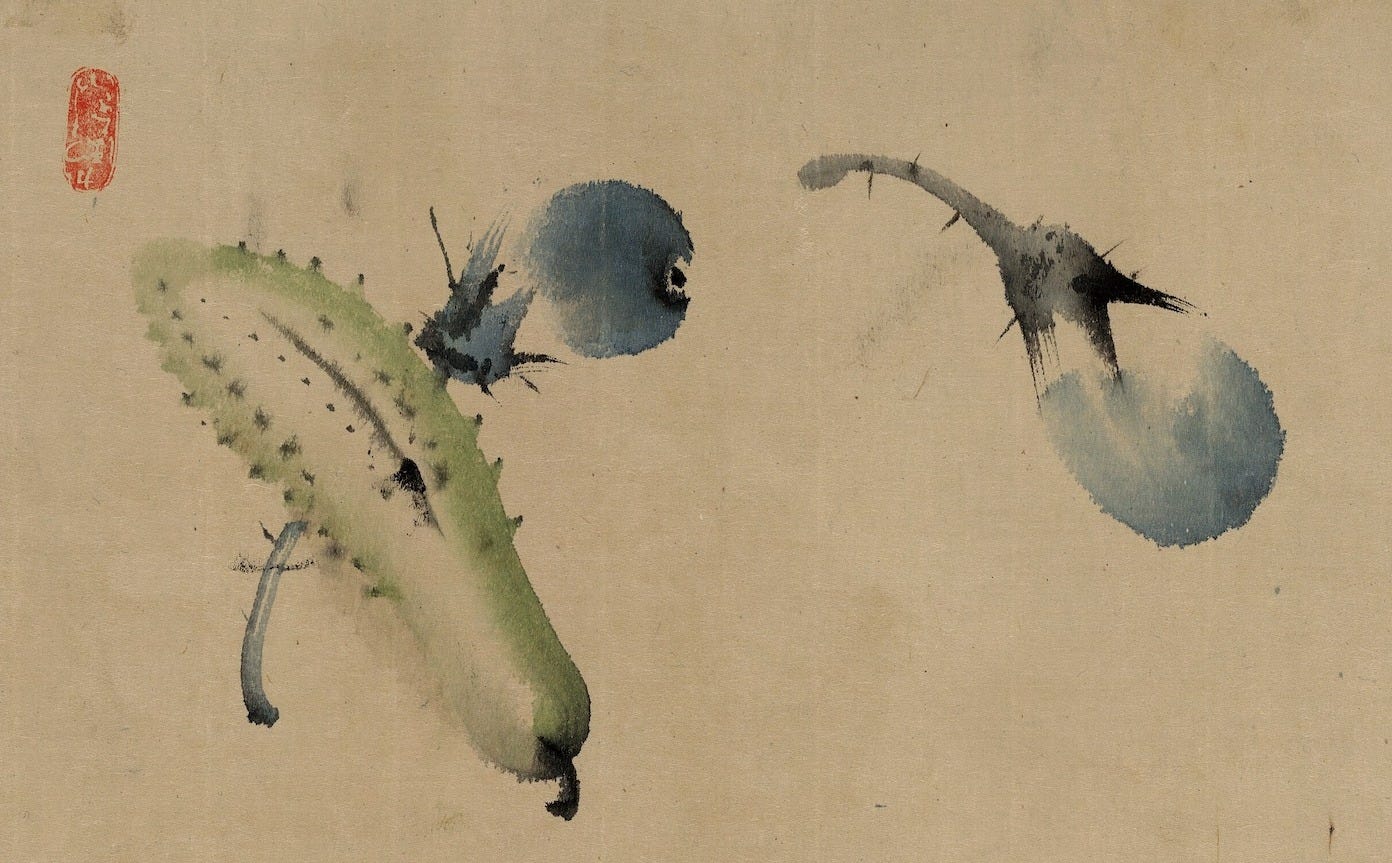
Cucumber or squash and eggplant, Katsushika Hokusai (1760-1849) (via Wikimedia Commons).

I made a good eggplant/aubergine dish too, the Middle Eastern, babaghanoush-related “moutabal” (or mutabal). Excellent, it was, with crudités, and on toast, and on a sort of assembled salad plate with whatever was resurrectible from my depleted fridge. Says Ottolenghi: “Baba ganoush and mutabal have one thing in common: they’re both a burnt aubergine mezze. Besides that, throughout the Arab world, they are two quite different things. Mutabal is made creamy with the addition of tahini, baba ganoush on the other hand is much lighter.” I approximately followed this recipe, here’s Ottolenghi’s slightly fancier version with pomegranate molasses and pomegranate seeds.
What Sydney’s most legendary chef did next: moved to the country. For The Australian Financial Review, Jill Dupleix visits Peter Gilmore at his little farm in south-west Tasmania. “I don’t plan to stop cooking,” he says, as he gently pulls a giant, burgundy-skinned onion from the rich soil and gives it a shake. “I want to open something really beautiful in Hobart that isn’t too small to make money, and isn’t too big to handle.”
Socials: news/observations/humour/inspirations
Stolen words
“Being alive at all is the most extraordinary stroke of good luck we will ever experience. Yet it is the easiest to overlook, to take for granted. We wake up in the morning, have our coffee, make breakfast, send the kids off to school, go to our jobs, move through our routines, worry about deadlines, check off items on our to-do list. And we forget that beneath all of it lies something profoundly rare: existence itself. The simple fact that we are here, conscious and aware, is so unlikely that it borders on the miraculous. Because we experience that miracle every day, we treat it as ordinary, even guaranteed, mostly unnoticed at all. We postpone joy, assuming there will always be more time. We don’t see the beauty in small moments. We simply go about the business of life, without taking a second to notice life itself. …
I believe it is a responsibility to myself – to not waste my precious life. In the immense hallways of time and of space, out of the fantastic number of potential lives and the infinite chain of accidents that led to this moment, I am here. I breathe. I see. I feel. I experience this grand spectacle of a cosmos I find myself in. That is not a thing to be wasted, or left unobserved.”
–American physicist, writer, and social entrepreneur Alan Lightman in a remarkable article in The Atlantic, “The Ordinary Miracle of Existing”.

What a fabulous edition. I will spend the week jumping in and out of links. Thankyou.