

Seeing ghosts
Some women can curate how they age. Others simply endure it.

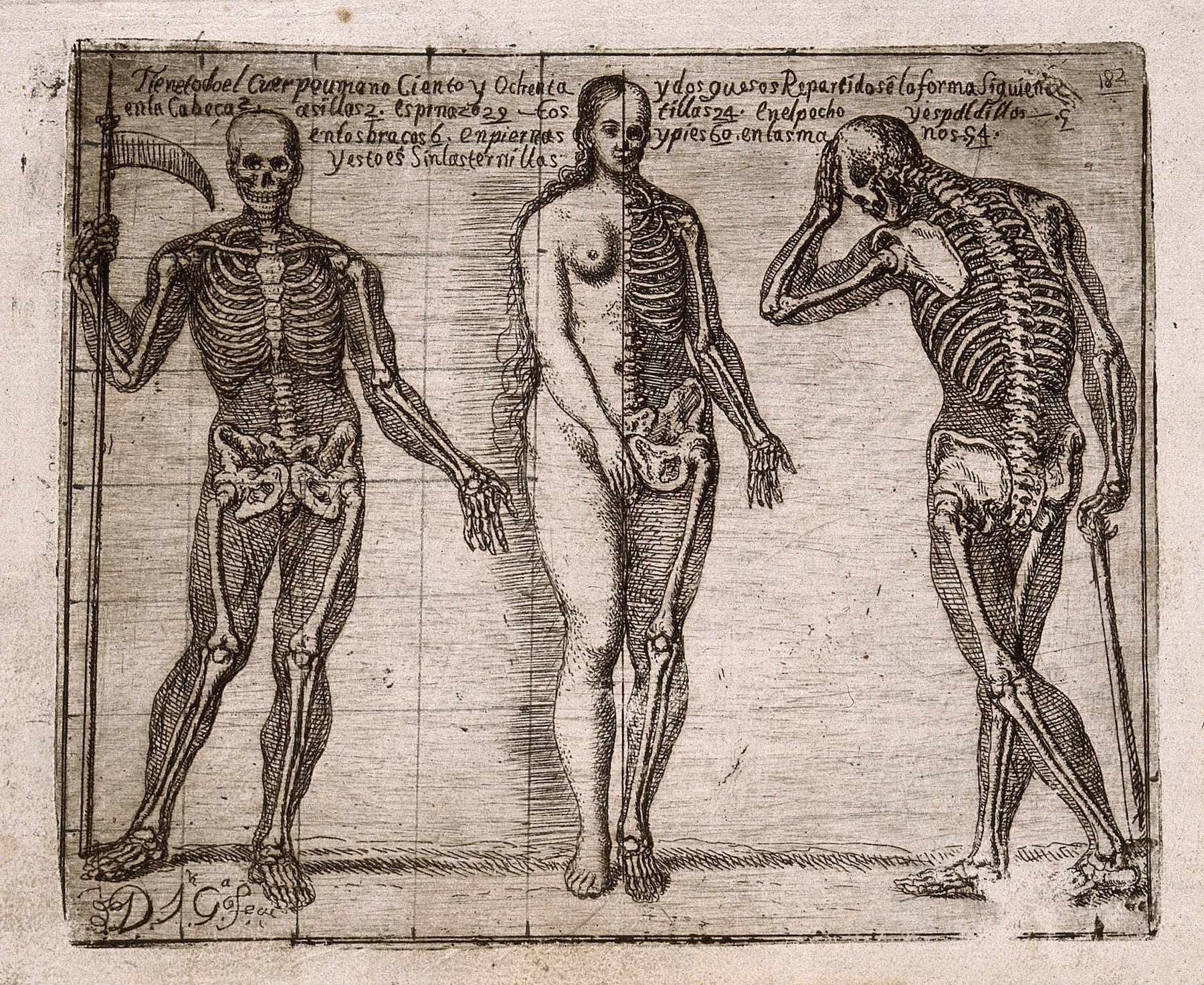
Etching of two skeletons and one half-skeleton, half-female figure, by the Spanish painter José García Hidalgo (c 1691, the Wellcome Collection).
I don’t know much about Demi Moore. I don’t know how to pronounce her first name (I just did a search – it’s Duh-mi). I don’t know whether she graduated school and studied acting or waited tables until some film-industry sleaze looked her up and down and shifted in his pants and gave her a break. I don’t know if she’s smart or stupid.
I know that I was bumbling my way through my second year of university when she was impossibly sophisticated in St Elmo’s Fire (I might even have tried to hold my cigarette just the way she did). I know that I thought her husband was hot and that Moonlighting was ace. I know that I sobbed in Ghost and thought it and she and Patrick Swayze were the most beautiful things I’d ever seen. I know that when she appeared on the Vanity Fair cover in 1991 cradling her bare, full, pregnant belly in that iconic Annie Leibovitz shot, I was too young and silly to see how fabulously brave and subversive it was.
I haven’t followed her since, perhaps I saw A Few Good Men, I can’t remember, I didn’t see 2024’s The Substance for which she was nominated for an Academy Award.
Until this year, I hadn’t had too many thoughts about Demi Moore.
I try to avoid commenting about other women, especially about their appearance, so as thoughts started to form, I held back from writing anything. I held back after images of Moore arrived on social media earlier this year as a black leather shadow with that absurd toy “dog” at Milan Fashion Week (with apologies to chihuahuas everywhere). I stayed silent again after Moore appeared at the Actor Awards in LA in Schiaparelli and 95 carats of Harry Winston’s finest.
But last week, a part of me snapped inside. Moore, a member of the Cannes Film Festival jury, appeared in multiple shots on multiple red carpets during the Riviera extravaganza and looked so emaciated that it seemed her skeleton might at any moment step outside her body and rattle and lurch away in search of a graveyard. Moore looked like she was about to break.
I don’t know whether Demi Moore has taken weight-loss drugs. I don’t know what surgery she’s had. I can only assume she’s had a bit of everything from the we-can-make-you-look-better buffet table. Because a woman who looked like this in her 20s, can’t look like this at 63 without spending her minutes, hours and days obsessing about how she can fix the flaws she perceives herself to have and calling on every possible scientific and cosmetic advance in service of her preoccupation.
To be sure, the film industry is famously cruel to ageing actresses; the pressure of that is barely imaginable. And of course, Moore is not the only woman in the public eye to appear emaciated. “Super skinny is everywhere as a trend again,” observed one Instagrammer recently, flashing up one photo after another of gaunt women showing off clavicles and rib cages.
But Moore is the most visible. She has 6.9 million followers on Instagram. She is effectively an influencer for ageing women.
I went back and had another look at a video of her red-carpet turn at the Actor Awards. She didn’t look like a talented, celebrated actor in mid-life confident in her achievements and her place in the world, a mother, a grandmother, much loved, much acclaimed. She looked tremulous, uncertain, brittle, unwell. The stiffness of her movement and affect were discomfiting. She looked as if that old skeleton had slipped away and an AI avatar had stumbled into its place.
She looked as though something was wrong with her.
Something is wrong with a friend of mine too.
I have written about Susan before, a woman in her mid-80s who lives alone in another state. Susan did not marry nor have children. She is not a mother or a grandmother. She relies on small savings and a pension. Over the past few years, her life has narrowed, the usual social and physical reasons – friends’ deaths, changes in her community, macular degeneration, the surrendering of her driver’s licence, deep loneliness the result.
Last week, Susan had a fall.
As you get older, you realise how chilling those words are.
For an older person, a fall can often be the start of a precipitous decline; a simple stumble can lead to a cascade of poor outcomes, from physical injury and reduced mobility, to a loss of confidence, quality of life and independence and, ultimately admission to aged care. Falls are the leading cause of injury-related hospitalisation and injury-related death among women in Australia (122,800 hospitalisations and 3,400 deaths in 2022-23). Hip fractures are the very devil – in around a quarter of cases, hip fractures lead to death. Of those who survive, a third of victims never regain full mobility.
Last time I saw Susan about three years ago she was as naturally slender as she has always been – barely a ripple of fat upon her – but relatively robust. A year or so ago in one of our semi-regular phone chats, she announced she’d bought a mobility scooter. In calls since, she has told me how she scoots around her small regional town on it but still manages to walk her little dog. I had imagined, assumed, that she was as robust as ever and the scooter was simply giving her a greater range, the car you have when you can’t have a car. But what Susan hadn’t told me was that her muscles have been weakening, her strength waning and she can’t keep weight on. (Tests show nothing, doctors can’t explain it, she says, nothing more sinister seems to be at play.)
Last week, Susan fell outside her doctor’s surgery before an early-morning appointment. No one saw her fall and she lay there for a while. She knew she’d done something to her knee, it was agony. After a while, she tried to lift herself, but her arms failed her.
The strength simply wasn’t there for her.
Demi Moore is obviously physically strong.
For years, we’ve heard details of her insane regime. When she was preparing for her role in 1993’s Indecent Proposal she cycled 60 miles a day. She trained with Navy SEALS to prepare for her character in the 1997 film G.I. Jane and, around the same time, showed her strength by doing one-armed push-ups on the Letterman show.
Even now, her musculature appears to have had as much pernickety attention lavished upon it as the detail, embroidery, beading and constricting corsetry of the couture gowns she wears.
Fabulous? Maybe.
And sure, we understand now that for healthy ageing, particularly for women, strength training and resistance work are essential for building and maintaining muscle mass and strength. Not only that: strength training can actually increase bone density, so helping to reduce the risk of fractures. A friend in her 60s who had worrying bone-density test results a year ago – before she started strength training – recently underwent new tests. Her results are significantly improved. Her optimism about life, her future, has increased significantly. She’s not skinny but she looks wonderful – and healthy. (See below, “Retirement”.)
For all of Demi Moore’s apparent strength, no matter how good her bone-density-test results might (or might not) be, she has manufactured an appearance of illness.
And just as we now understand the importance of strength training, so we understand that extreme thin-ness in ageing women can be as great a cause for concern as obesity. In elderly women, it can be a major problem, indicating a range of issues including malnourishment, muscle wasting, depression, dementia and chronic illness.
When I think of my friend Susan and her struggles it’s impossible not to see Demi Moore and her contrived appearance as a perversity. She has the endless privilege and wealth to choose how she will age – how she will look, which doctors she will see, which personal trainers and chefs and dietitians she will employ, what she will eat, which medical (and other) treatments she will have, how she will be cared for if she has a fall or illness – and she makes this choice and parades it as an ideal before countless flashing cameras broadcasting countless images to the world.
She has chosen to present an image of manufactured frailty while hundreds of millions of other women like Susan without her privilege must contend with enforced frailty.
They could be forgiven for finding Demi Moore’s aesthetic choices insulting.
Especially if they’ve seen her 2024 film The Substance.
So here is another perversity in the room: The Substance tells the story of an ageing TV fitness star who is fired for being too old and turns to an illicit drug to create a young, perfect version of herself. The Guardian described the film as a “feminist body horror” film, a satire about ageism, vanity and the pressure women face to remain desirable. “A fearless takedown of absurd beauty standards,” was a marketing line overlaid on the trailer.
In one interview promoting the film, Moore said that “it allowed me on a personal level to look at those areas of judgments that I was holding against myself … those standards that are not necessarily realistic” and “I felt like it was also exploring this idea of not just aging, but that violence that we can have against ourselves, which I feel is such a human relationship relatable issue that we all share”.
But perhaps she channelled the ideas and words marketing people and publicists whispered in her ear, perhaps they are not her own, because nothing in Moore’s appearance suggests those judgments she described have loosened their grip on her.
Susan went home from hospital yesterday after more than a week. When I checked in via text last night with her she replied with “😀😀😀”. Thank god, she didn’t break her hip, just a bone in her knee. She will have a brace on her leg for six weeks at least.
Susan is plucky, fiercely independent, and by drawing on more services through her My Aged Care package, she hopes she can stay in her little flat for at least another year. She hopes that her little dog, being cared for by friends right now, can come home soon too.
But Susan is pragmatic. She knows she has no choices: she will end up in an aged care facility. She says that when she can move more freely, she will start lightening her load, offloading her physical possessions.
And she wants me to visit her soon. In her will, she has left an antique ring for me. She wants to give it to me.

Housekeeping
I dropped the ball on last week’s newsletter … So sorry! Between multiple long-standing social plans and multiple story commissions, I wildly overestimated my capacity for surprise visitors, difficult interviews and the general chaos of freelance life. I’d barely started Vamp when the week was over.
So, by way of apology, this week’s edition is a bumper one – plus I have a gift for one reader!
I’ll post out a brand-spanking-new New Yorker tote to the first person to email me with the subject line, “MOOD: OVERWHELMED!”. (I recently resubscribed and they sent me a new tote … I already have a cupboard of them. Incidentally, the reverse-side slogan is – “The Right Question Changes Everything”. )
🎵 Mood
Part of the soundtrack of my 20s, and probably so many of yours too, The Church’s Under The Milky Way – “… a meteor shower of jangly guitars, moody A-minor chords, ebow instrumental interludes and otherworldly lyrics about ‘something shimmering and white’ that ‘leads you here, despite your destination’,” said The Guardian. In November, The Church is touring – “A Psychedelic Symphony with the George Ellis Orchestra”. Shows around the country, including at the Opera House.
Wild thing
Irish stand-up comedian, actor and screenwriter Aisling Bea’s “blancmange speech” on The Jonathan Ross Show – how tremendous! What, Ross asked, would be her best selling point were she to engage in commerce on the OnlyFans porn platform. And Bea was off. “Nothing more delicious than serving up a wobbly, sexual blancmange metaphor to throw off misogynists and cads,” one person commented on the social media platform formerly known as Twitter. Others suggested it was all pre-scripted. They might be right, but it’s no less delicious for that.
Reading
DATING APPS: As users desert them and revenue tumbles, dating apps are leaning into AI. Bumble, for example, has announced plans to eliminate its swipe-left/swipe-right feature and, according to The New York Times (gift link here), is testing “an AI assistant it calls ‘Bee’ aimed at understanding things like users’ values and relationship goals, then suggesting matches.” (A better first use for AI to address – the pox of slimeballs and scumbags on the apps?)
ANDREW, AGAIN: Oh, but wait, there’s more: Andrew Lownie has updated his book Entitled, the horrifying exposé of the commoners formerly known as the Duke and Duchess of York. In her Fresh Hell newsletter, Tina Brown digs into the muck: Andrew viciously kicked his Labrador in the head for stealing a sausage roll, Sarah Ferguson allegedly “had sex trysts with baby-oil extortionist P. Diddy”, “Andrew could have been the useful idiot of Russian espionage operations”. Brown notes that while the former prince is being investigated for suspected misconduct in public office, other potentially more serious behaviour – “decades of Andrew’s sordid exploitation of women”– might go unrectified.

ABORTION: Perhaps this might resonate with at least a few of you? Philippa Perry helps a reader who says – “I decided to have an abortion but I never wanted to go through with it.”

THE BEST NOVEL OF ALL TIME: I’ve linked before to the tremendous “Secret Life of Books” podcast and its brilliant Middlemarch book-club series (small subscription). Now The Guardian has declared the 900-page portrait of 19th-century provincial life to be the best novel of all time. “This is a novel about what it means to be good. And it is impossible to emerge from it unchanged. It is a celebration of the quiet heroism of unremarkable lives, all those who “rest in unvisited tombs” as the melancholy last line has it.”
MID-LIFE LOVE: Via the ABC, the story of a punk grandmother and an old rocker who found love. “I was a first-time bride at 61. My mother used to be a manager of a Vinnies and I saw this white dress with gold beading there in the 90s, and I bought it, and I said to myself, if I ever get married, I'll wear this dress. And you know, 30 years later, I did.”
RETIREMENT: Yikes, this is scary: The average healthy 60-year-old has only 12 years before their mobility, energy and independence start to significantly decline, says retirement planner Dan Haylett. “This isn’t pessimism … it’s just biology. Muscle mass declines. Bone density decreases. Balance becomes less reliable. Chronic conditions accumulate. The resilience you took for granted starts to fray.” Haylett’s advice: “Front load your retirement.” (And, see above, “Seeing ghosts”!)
THE LONG READ: A horrifying story in The New Yorker, a 10-year-old girl is trafficked from Guinea to Texas and becomes a family’s slave. “Djena lived with the Toures for sixteen years. During this time, her belief that they considered her one of their own gradually eroded, like a riverbank worn down by steady currents. There were five other kids in the house: Mohamed and Denise’s three sons and two daughters. They all went to school. Djena did not. She worked from morning to night, cleaning and cooking meals for the family even though she wasn’t allowed to eat alongside them, except on special occasions.” (It might be behind a paywall, but these types of stories are what makes the magazine so vital.)
HUMOUR: From Dave Barry … how the rich are different … “Notice what’s missing from this morning routine? That’s right: Billionaires don’t go to the bathroom. They have staff for that.”

MID-LIFE SEX: This post on American doctor Sara Szal’s Substack, “The Female Edge”, has more than 9000 likes … clearly the subject has struck a nerve. Szal writes: “The dominant model of sex is linear, fast, and culminating: arousal, penetration, male orgasm. The female orgasm is optional punctuation. That model fails female biology on every axis the research documents.”

(Political) quotes of the week past fortnight
“Many on the left believe that, if only voters can be persuaded to think more about the £5m personal donation [Nigel] Farage took, or his connections to cryptocurrency, or what he said at school, Britain will turn on him and his movement will collapse. They are deluded. He is the stick voters are using in their anger to beat those they blame. They aren’t going to examine the stick very closely. They just want it to hurt”–Andrew Marr in The New Statesman on Britain’s “political theatre of cruelty and hatred”.
Plus: on the subject of RWNJs in Australia:
“Demographic reality (and the success of the Teals) tells us that chasing [Pauline Hanson] into the badlands of white nationalist demagoguery, climate change denial and voodoo economics, widens and deepens the Labor Party’s protective moat surrounding urban Australian electorates. You know, the ones where the vast majority of people live.”–John Birmingham on his Alien Sideboob Substack looks at Opposition Leader Angus Taylor’s budget reply speech in the wake of the Coalition’s catastrophic Farrer by-election outing.
SUPPORT MY INDEPENDENT WRITING AND GIVE SOMEONE
YOU LOVE A YEAR OF ESSAYS, CULTURAL RABBIT HOLES AND SHARP CONVERSATION WITH A GIFT SUBSCRIPTION TO VAMP.
Listening/Watching
DAN LEVY/BELLA FREUD: If you have a fashion leaning, you might enjoy Bella Freud’s podcast, “Fashion Neurosis”; Freud makes me want to eat my own knees but I had to listen to her episode with divine Schitt’s Creek creator/star Dan Levy. Cool insights into dressing the late Catherine O’Hara’s character, Moira Rose, and I learned about Levy’s funny work a couple of years ago for the luxury Spanish brand LOEWE (above), an excellent brand campaign starring Levy and Aubrey Plaza (White Lotus). Plus: subsequent searching has revealed that Levy co-created and stars in the new Netflix series Big Mistakes – “a passable excuse for Levy to create another bickering, boundary-decimating on-screen family”, says The Guardian, luke-warm but I’ll be giving it a go, because, Levy. (If you’ve not yet seen the wondrous Schitt’s Creek, here should tell you where it’s streaming now; Big Mistakes seems to be streaming on Netflix.)
ANNABEL CRABB: Annabel-everywhere (she must have a PA) has a new podcast – “History or Hoarding” – in which she dives into the State Library of New South Wales’s deep collection. It goes far deeper than books: the seven (!) levels below its Macquarie Street premises holds letters, maps, old restaurant menus, military antiques, coin collections, stamps, walking sticks, a lock of Mary Shelley’s hair, cigarette cards and globes.
Plus: I’m keen to see this … Tony, the Anthony Bourdain biopic, coming soon. More info on the film in The Guardian.
Beautiful Things
Oooo, how I love this – French artist Sandrine Torredemer’s fabric/embroidery work. Via Instagram.
Via Instagram, good grief.🧊
I really think you’ll like this, via Instagram – “there is never an end to holding” … women’s holding.
In 2018, UK-based illustrator Zara Picken started an Instagram account called Ephemerara, a “found history of modern illustration”. Now Picken’s “Modern Illustration” website/archive has picked up the job, putting a spotlight on the work of pioneering illustrators from the 1950s to the 1970s. Think beer mats and postage stamps, leaflets, ads and programs … just a gorgeous collection of retro fabulousness.

Lord I wish I had a scrap of coordination; instead, must content myself with enjoying this fabulousness, via Instagram. (I have not moved my body in a dance-approximate way since, god, 2001 … perhaps it’s time I tried again …?)
Food
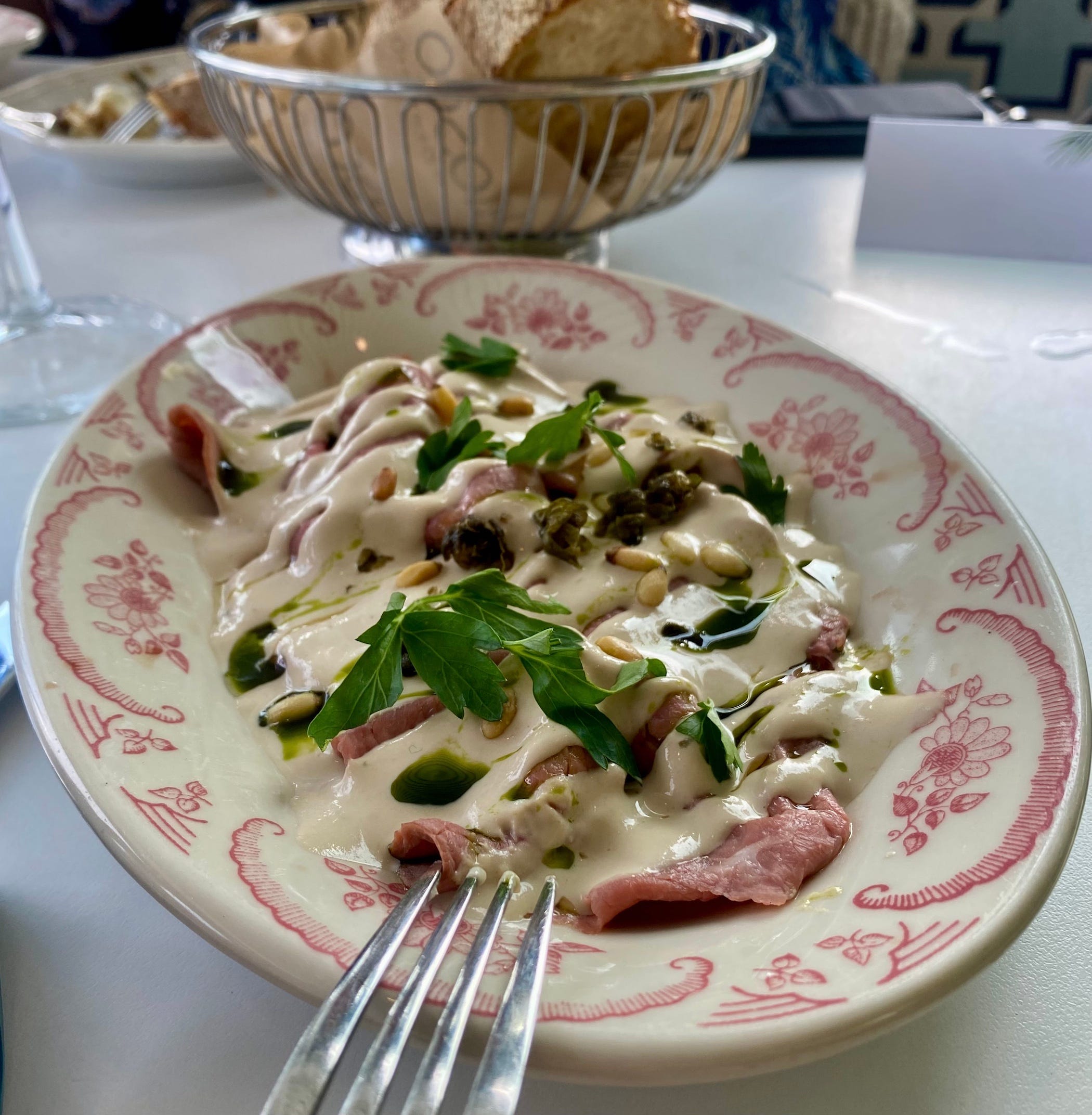
TONNATO SAUCE: A corker of a dish last weekend – vitello tonnato at a friends’ joint 60th lunch at Chiosco by Ormeggio at the Spit in Mosman. … Slow-cooked veal, tuna mayonnaise, fried capers, pine nuts, parsley oil. Super spot, sun casting glitter across the water, lovely Soave, old friends, super afternoon. I plan an attempt at re-creation in part … see step 4 here, the tonnato sauce. And I agree with Jill Dupleix, tonnato is really such a good sauce that you could eat it by the spoonful – or use in a potato salad or with grilled vegetables or in a baguette with rocket, hard-boiled egg, red onion and tomato ... or in any number of other ways. (A savoury tonnato ice-cream even?) (There are those among you, I know, who take far superior restaurant/food photos, Y, forgive me my trespasses!)
SAVEUR MAGAZINE: I took a fly past the website of one of my favourite food magazines this week – don’t often get around to it – and now I’m dying to follow the magazine’s travel guide to Galway (Moran’s Oyster Cottage for oyster thermidor and Fawn for black sole on the bone with butter and capers and Irish cheese at Sheridans Cheesemongers), and to Hong Kong too (for the steamy nights, for crab in Lockhart Road and hot beef noodles in Central). And a bunch of recipes popped up in my skim-read that I want to cook: Rhode Island Johnny Cakes, Chinese Scallion Pancakes and The Best Blueberry Scones.
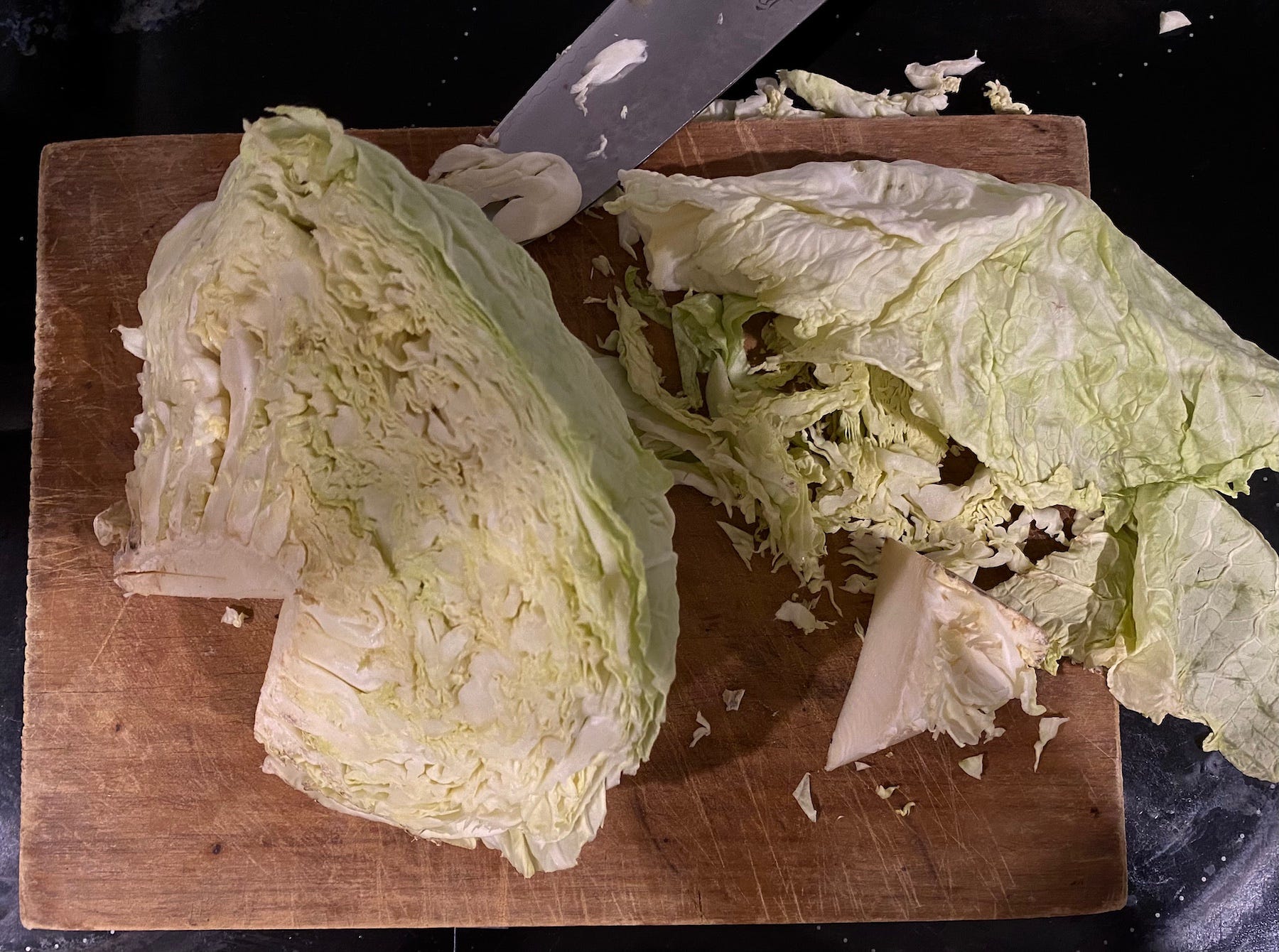
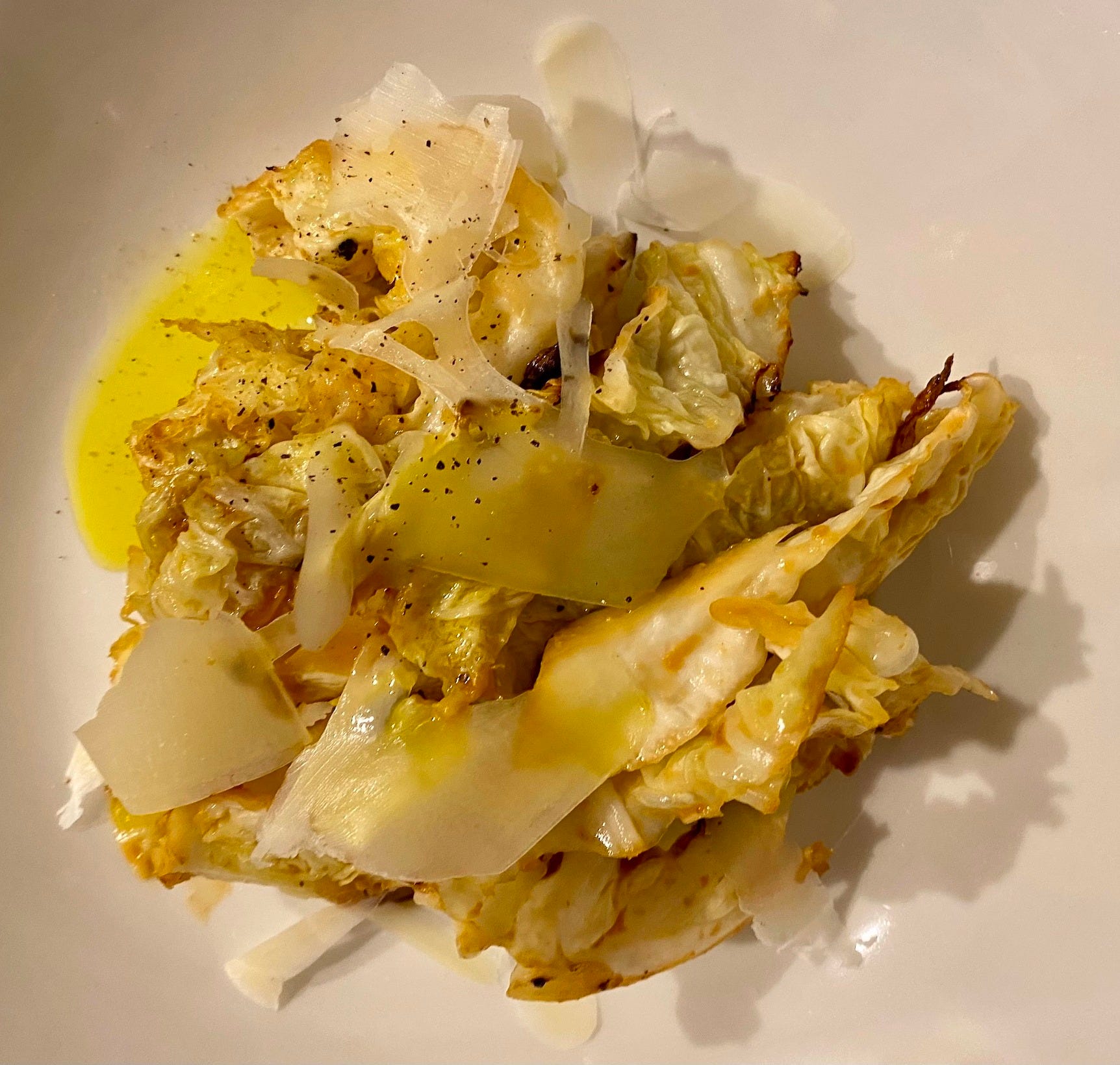
OLD CABBAGE: It’s a hill I’m willing to die on: wasting food is a moral failure. Last week I brought leftovers home from two restaurants; they gave me three more meals. Last night I resurrected half an old cabbage from my veg drawer. It was limp when I grabbed it from Harris Farm’s cheap-specials table two weeks ago, limper and browner last night. I pulled off the old outside leaves, sliced away the sad brown bits, cut out the core and soaked the cabbage in cold water for an hour or so. It’s a miraculous way to rehydrate the cells of an old soul (old lettuce, celery, leafy greens respond similarly). Then, to vaguely replicate fab cabbage dishes I’ve had at restaurants over the past couple of years, I mixed miso from the back of the fridge (dry remnants, old too!), butter, crushed garlic, sea salt and tossed it with the cabbage. On to a tray and into the barbecue for 15 or so minutes. Shaved grana and a drizzle of olive oil on the top. Entirely decent.
Home
Via Instagram; my sort of spaces, loved, lived-in, creative, human.
And, via Instagram … in the same vein, a fashion director’s gorgeous house in France.
Via Instagram; it’s the dogs, not the draughty rooms I’m here for!
Socials: news/observation/humour/inspiration
 Tiktok failed to load.
Enable 3rd party cookies or use another browser
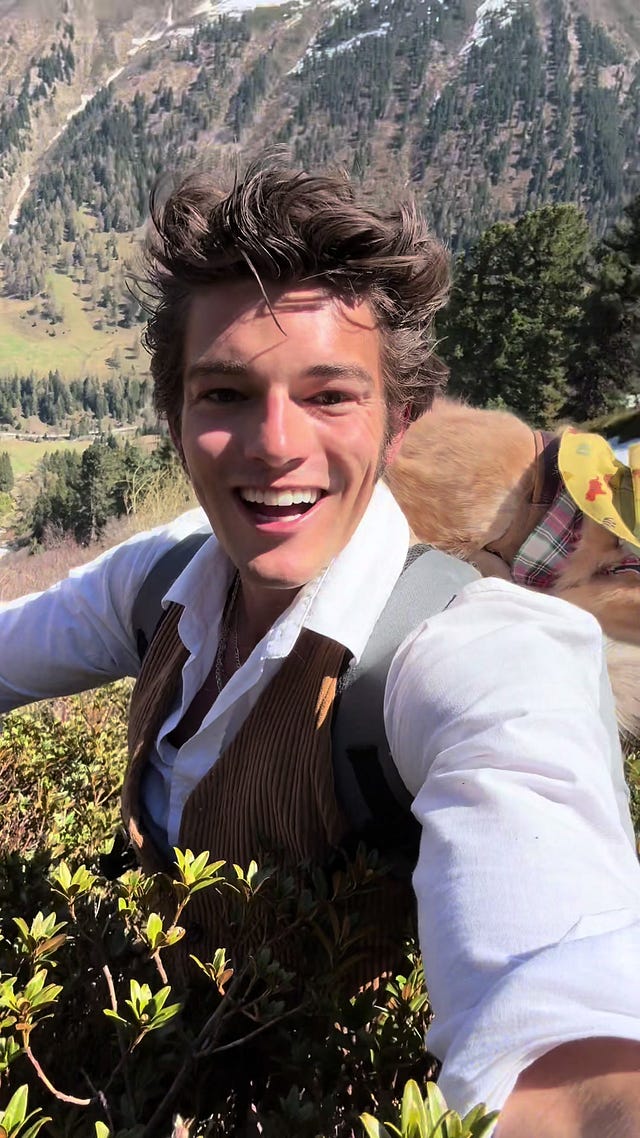
Via TikTok; meet Peter Mairhofer, the Austrian model who walks in the Alps with his cat, Eddy, in a backpack.😹
Via Instagram; in not entirely unrelated news, the L.A. underground alt-clown scene has, apparently, become a huge thing. According to New York magazine, it’s scrappy, subversive and disruptive and features clown gurus and weekly clown jams. “ ‘It’s like grunge in the ’90s’ or ‘the Beatles in Hamburg’, ‘the Greenwich Village that gave us Bob Dylan’, the chorus of clownery says.”
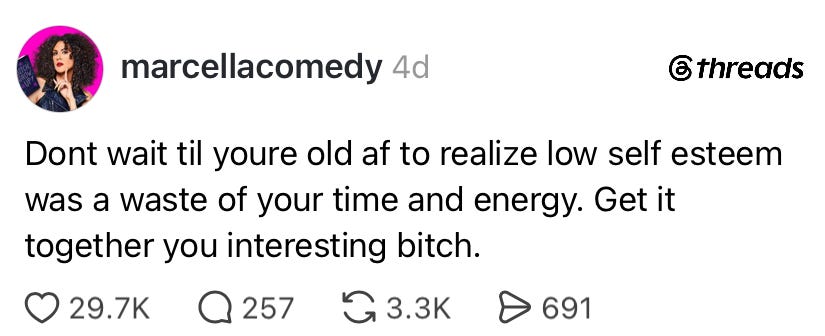
Via Threads.
Full story here (gift link).
Right to the end, babes, to the end; via Insta.
Stolen words
“Writing and reading decrease our sense of isolation. They deepen and widen and expand our sense of life: they feed the soul. When writers make us shake our heads with the exactness of their prose and their truths, and even make us laugh about ourselves or life, our buoyancy is restored. We are given a shot at dancing with, or at least clapping along with, the absurdity of life, instead of being squashed by it over and over again. It’s like singing on a boat during a terrible storm at sea. You can’t stop the raging storm, but singing can change the hearts and spirits of the people who are together on that ship.”–Anne Lamott, Bird by Bird (via James Clear’s newsletter).

Great to have you back! My sisters and I are currently dealing with our father’s recurrent falls and rapid decline. Very challenging.
FYI I’m fairly sure Crabb’s podcast is about the State Library of NSW, not Victoria.
There is a staggering number of women walking about oblivious of the fact that they have osteoporosis or its forerunner osteopenia. I was one of them. For the most part, this condition, sometimes called a 'silent disease' (like glaucoma) creeps up on you and does not reveal symptoms until a fall occasioning a fracture or break, usually of the hip, spine or wrist -- when x-rays and scans show not only the fracture but porosity indicating the development of osteoporosis. Bone densitometry, otherwise known as a DEXA or DXA scan, a safe, painless, low-dose X-ray that quantifies bone mineral density (BMD) is the gold standard used to diagnose osteoporosis, identify osteopenia, and predict your future risk of fractures. A bone density scan (like PAP smears) should be routinely offered to all women. Moreover, a bone mineral density scan does not tell all of the story, so other tests and signifiers should also be offered. Without strong bones, sufficiently strong muscles and good balance, we are headed prematurely to the 'bone orchard.'